

The Problem With The SpaceX IPO

Elon Musk, the man everybody in finance seems to never stop talking about. This time around we have an upcoming IPO of his famous company “SpaceX”. SpaceX or Space Exploration as its full name, is about to be publicly traded on the market for the first time in June. Today we’re going to talk about what that means for investors, and why there are so many problems surrounding the IPO.
What Exactly Is “SpaceX”?
If you haven’t been in the loop already, SpaceX is a company founded in 2002 by Elon Musk that now primarily focuses on artificial intelligence, rocket propulsion, space flights and satellite technology. Musk’s goal has always been to provide access to space in ways that are much cheaper than previously used methods. One of the most famous ideas he’s proclaimed is that he wants to eventually have colonies on Mars.
Originally, Musk wanted to create greenhouses on Mars and tried to get a launch vehicle through Russian contracts. The Russians did not want his offer and so on the flight home he decided to start his own company to create affordable opportunities to get access to space. Over the next few years he hired over 100 employees picked by hand and started to create his rockets.
The first orbital vehicle was named the Falcon 1 (After the Millennium Falcon in Star Wars) and had cost upwards of $100 million to create. The launch failed and so did the next two attempts from the company. Tesla at the time had also failed financing meaning that Musk was nearly bankrupt in this whole ordeal. The fourth launch attempt however was successful in 2008 and SpaceX was awarded a $1.6 Billion contract from NASA meaning Musk could continue his company endeavours.
From there on out the company has gone on to launch hundreds of more times successfully, create a high-speed satellite system for consumers, and lately has developed new AI technology. The company is now officially filing for IPO and will be traded on the market in June of 2026.
What Does The IPO Mean For SpaceX?
If you aren’t aware of how an IPO works, a private company now gets traded on the public stock market for the first time for any investor to purchase shares. SpaceX grew overtime as a private company meaning that only private investors could hold shares of the business. The business would also do funding rounds to get added value in order to continue operations for investors.
One of the main purposes of an IPO is that the business is now large enough and can attract enough interest from outside investors to further get capital for business operations. SpaceX did all this and has now applied and been confirmed for its IPO. It had to go through the process which meant getting value assessed, preparing formal documents, planning share price/amount of shares, etc.
When a company files for IPO, investors can get a sneak peek into public filings on the “S-1” document and see the current financial situation of the company. This means before you get a chance to invest, the entirety of the market can evaluate the financial stability of the business ahead of time. This gives all investors time to decide how they’ll react when they can inevitably purchase shares upon IPO.
These filings are one of the big “red flags” for many investors that I’ll get into. It shows the true value of the business and whether or not the almost $2 Trillion valuation will be worth it. The other major changes for this IPO are that insiders will be allowed to sell shares much earlier than expected, and the company will almost immediately be included into indexes. Normally when a company IPOs, insiders cannot sell shares for 180 days after the IPO. In the case of SpaceX, they proposed structured sales where insiders can sell a portion of shares at certain times before the 180 day period ends.
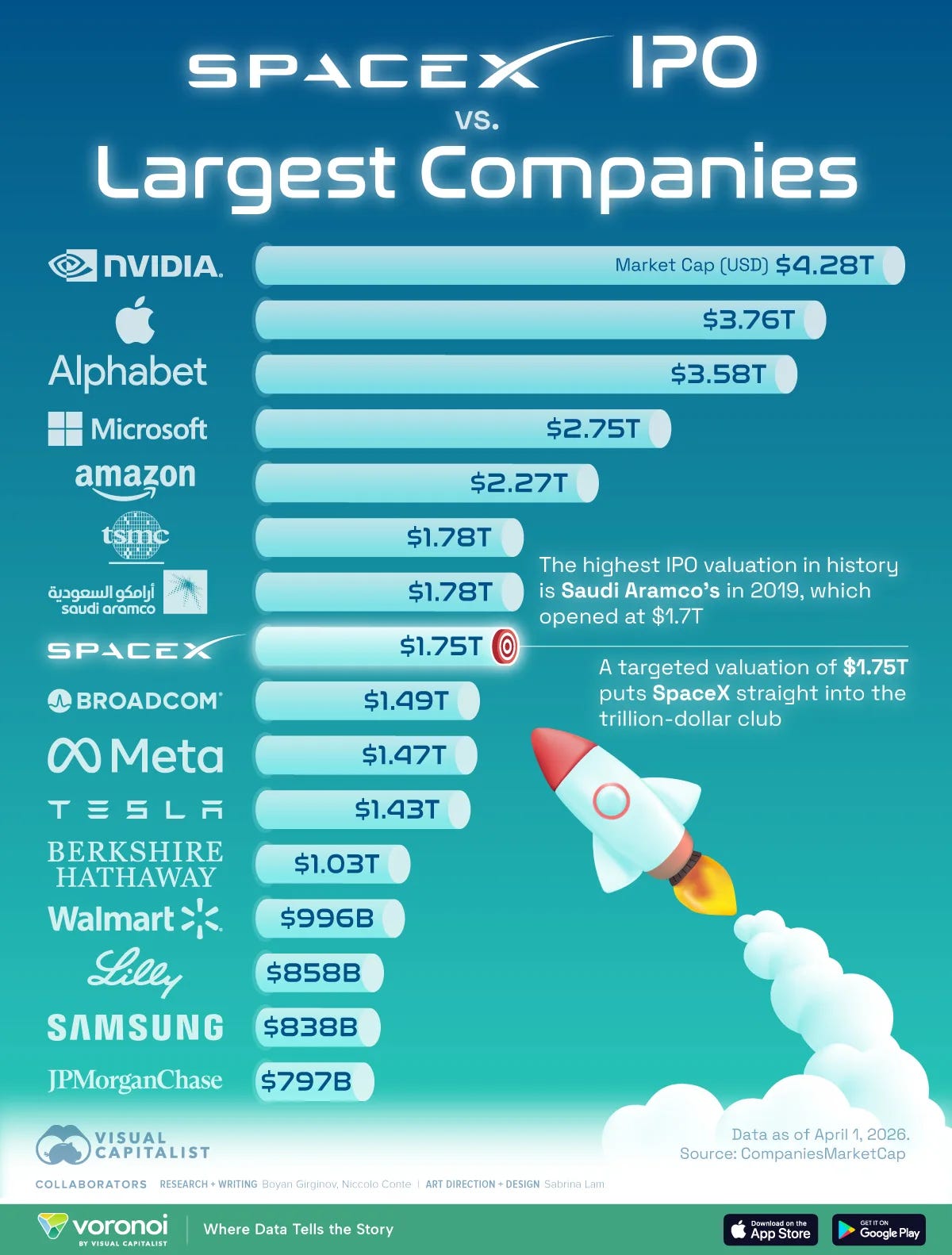
SpaceX will also be receiving very quick entry into the NASDAQ given the new rule surrounding company size. After May 1, any company larger than the Top 40 companies in the NASDAQ can join the index, meaning SpaceX will qualify and be able to join just weeks after it’s first trading day.
This means that not only is the company changing how IPOs have typically looked, it will officially be the largest IPO in existence (at expected valuations) beating out the previous leader of Saudi Aramco. These massive headlines are really setting the company up for great success or massive failure, which will it be?
The Problem With The SpaceX IPO
Given we now have all the information gathered for the IPO, what actually is the problem with the SpaceX IPO? Why is there so much negativity surrounding it?
Let’s start with the valuation.
Given the expected valuation of $1.75 Trillion, the financials of the company matter more than ever (one might think). The main focus has been the profitability of the business and what each segment is actually achieving. The 2025 revenue for the business ended up being $18.7 Billion and grew 33% YoY from the previous year. Net income also came in at a loss which ended up at -$4.9 Billion. This is not a great look for a company at such a size.
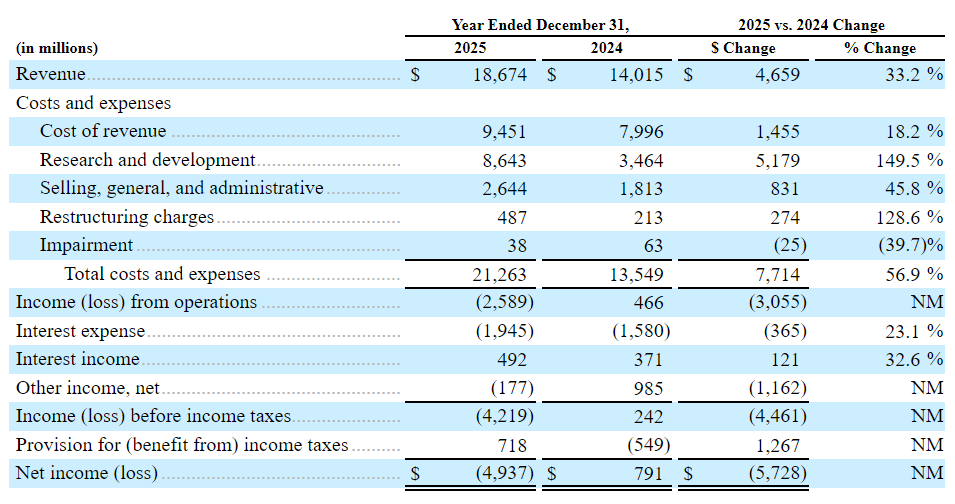
With a $1.75 Trillion valuation, these numbers put SpaceX at a Price-to-Sales ratio of over 93x. For reference, other popular “overvalued” companies like Palantir and Tesla (Musk’s own) are sitting at 62x and 16x respectively. That’s not very reassuring especially given the size of the company and an already negative income this past year.
Another large financial issue with the business is that SpaceX is currently rolling out both large investments into their equipment, and losing a lot on their AI segment. As of 2025 year end, the AI segment had a net loss of $6.355 billion. The bulk of the investment activity as well comes from the “plant, property and equipment” line in the cashflow statement and encapsulates a lot of their main equipment used to create rockets, satellites, etc. In 2025, their total cash flow from their equipment line was a net negative of $20.737 Billion; that’s more than their total revenue for the entire business. Investments and purchases that large usually need to come with an even higher rate of return.
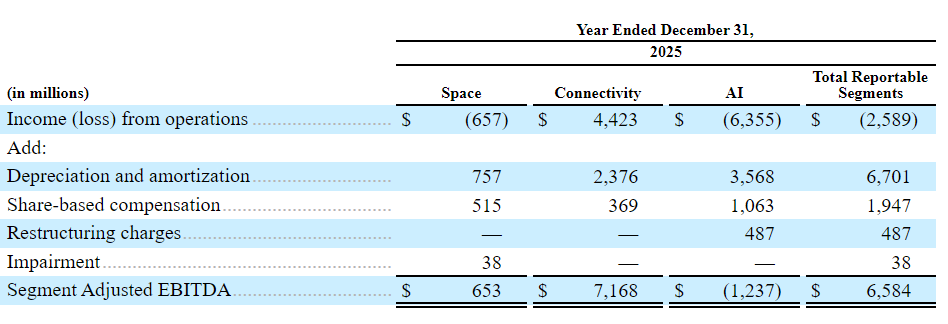
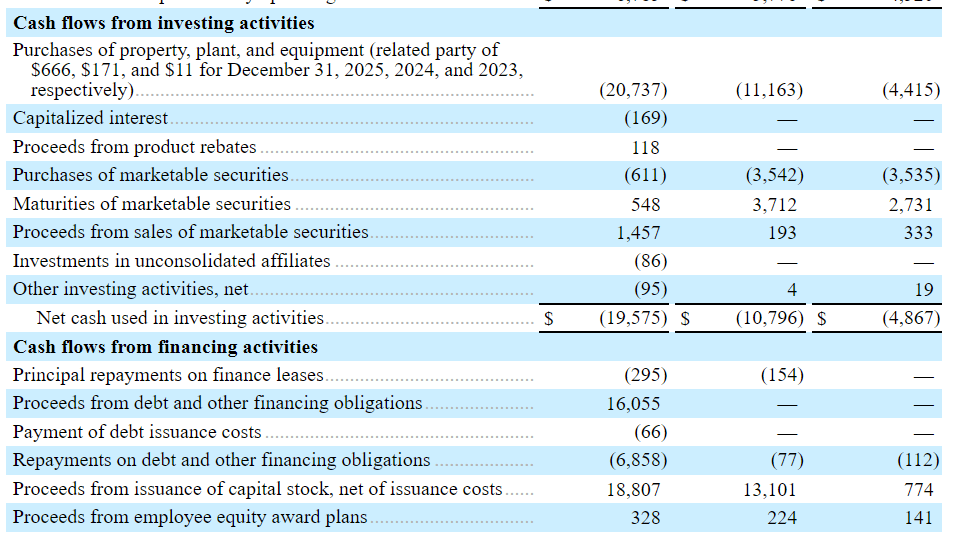
Considering not only is revenue so low as is, having such poor margins and such large negative investment cashflow coming up to an IPO isn’t that beneficial for such a huge valuation. A business aiming to IPO at $1.75 Trillion needs to have huge YoY growth metrics to even be considered fairly valued. Revenue is currently only growing at 33% YoY, and under normal circumstances that would be a very solid metric for most companies. Considering how overvalued the company is, that’s still very minimal growth to even catch up with market trends.
The average P/S ratio of the NASDAQ (the index in which SpaceX will join) is around 5-6x. Assuming share price never moved and valuation stayed the same with a 33% YoY revenue growth, it would take 10 years for the business to be “fairly valued” just in respect to its market peers. That’s also only a metric of revenue growth, having such high valuation while also having a net loss of income really doesn’t set the business up for much success. When tech is producing insane growth metrics of 50-100% YoY on positive income even in businesses like NVIDIA, you really need to have similar numbers to compete in an AI industry.
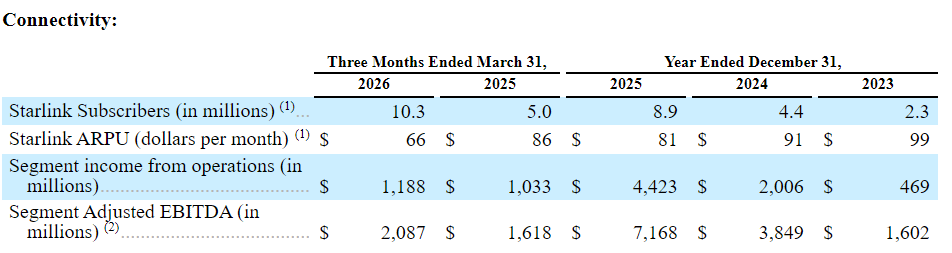
Now to be fair, there isn’t all negative things about the business. Connectivity is one of the best performing sections of the business. Growth rates on the Starlink subscribers and income from operations has been consistently 100% YoY. This is also their most profitable segment by far and what’s holding the business a float in some ways. The problem is it will still take a few years or more for the segment to grow large enough to even compete with AI to balance out income levels.
Putting the financial aspect aside (one of the most important things of course to understand), there’s been a lot of controversy as well surrounding other aspects of the IPO. Like I mentioned earlier, SpaceX has allowed for early insider sells for stock as well as the newly changed NASDAQ rule. Both of these changes have brought massive controversy and many have labelled the entire IPO as a scam and fraud to get insiders easy exit.
There is very valid points to this, it’s highly unorthodox to have such a major rule change seemingly just to benefit one company. Long standing rules and regulations were put in place for a reason to ensure all IPOs went through the same process, it’s definitely not normal (if it’s right is subjective) for this to happen. It also sets an entirely new precedent for any future IPOs that may fall into this category (Anthropic and OpenAI will be the next ones to watch for).
The insider sale rules is also a seeming red flag for such a large company. Notably, Elon Musk will not be affected by the new rules but other insiders will be. However, with the new insider sale rules Musk will eventually become the first public trillionaire, and many new billionaires will be created due to insider selling. Having such a quick path to selling shares is seemingly very shady and for good reason. The reason you’d want to sell insider shares so quickly is because management knows that upon IPO share price will sharply drop over the coming months and they want to squeeze every penny they can out of their investments. The rules only allow for periodical sales of a certain percentage, but this seemingly indicates that insiders want out fast, and that should get the attention of the average investor.
What Will Happen After SpaceX IPO?
The problem with such a large IPO like this is that the outcome is totally unknown. Given that the entire thing also revolves around Elon Musk makes this even more uncertain territory. There is currently no telling what might happen and retail investors should realistically be prepared for anything.
Historically, IPOs are very risky to buy right away. In the past 5 years, many famous IPOs have led to long periods of negative returns before investors ever went positive again. Some famous retail ones are companies such as SOFI and Robinhood. Both of these had massive IPOs surrounding their company, and very shortly after they both went into years of negative returns.
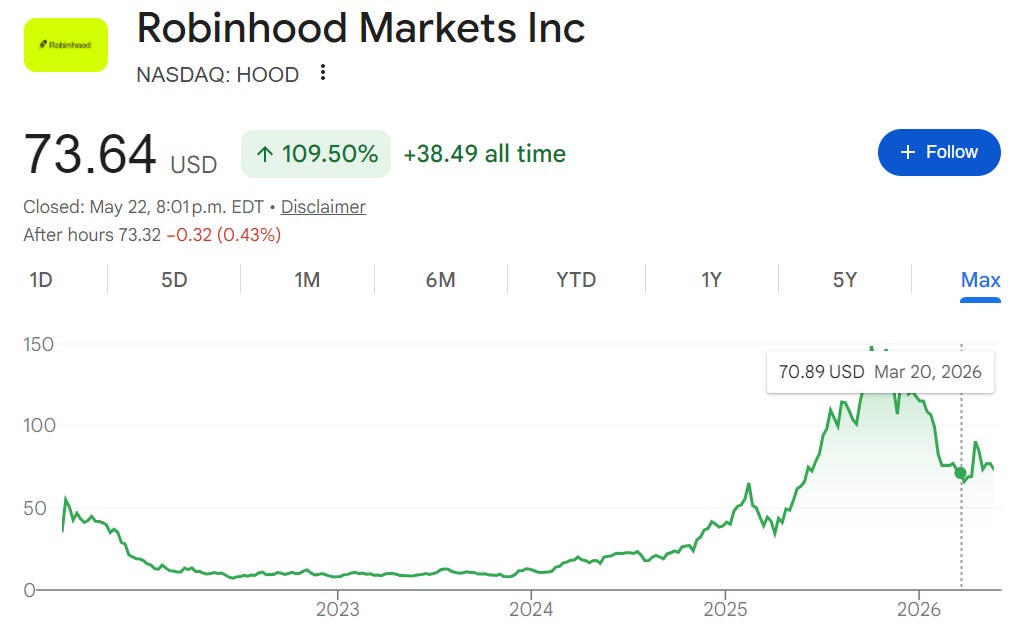
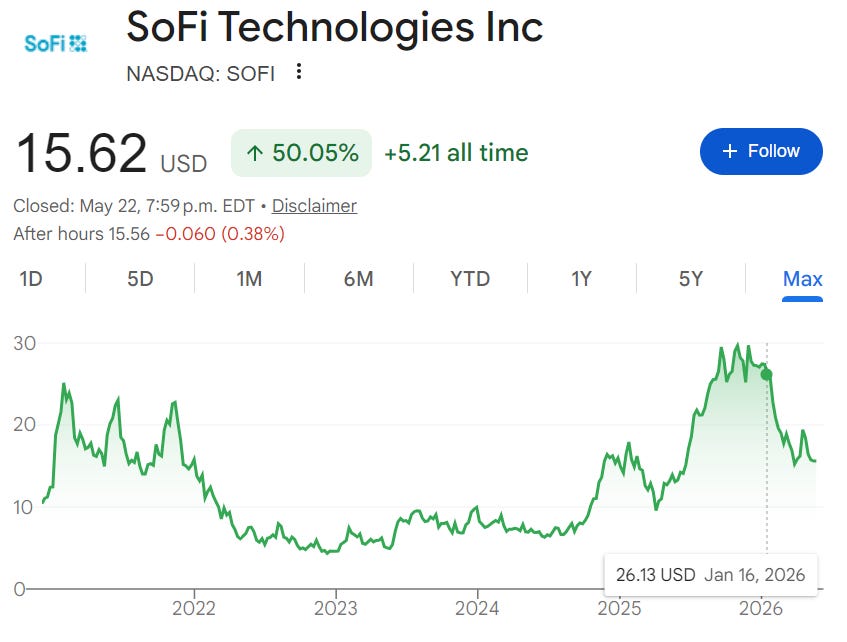
This is not uncommon for many IPOs, especially ones with increased popularity. Many companies become “meme stocks” upon release to the market, and it takes a few months for fundamentals to be reflected into the price. In this case, SpaceX is one of the mostly widely recognized businesses and with such disconnected fundamentals, who knows where the share price could go.
Tesla is also historically known as another meme stock, but in this case many investors argue that Elon Musk fanboys have kept the business afloat even amidst failing revenues. Since COVID Tesla has skyrocketed in share price and never really came back down to what many people consider a reasonable valuation. This is one of the possibilities for SpaceX, considering it’s insane popularity amongst many space, AI and Elon fanatics, long-term absurd valuations are very possible. Considering the share float is also only going to be 3%, high volatility will definitely be likely the first days after IPO.
The opposite is also possible, the market might react accordingly to fundamentals, or most people realize the flawed valuation and reevaluate it accordingly. You might see a sharp decline in share price shortly after IPO leaving many bag holders in the process.
What Should You Do As An Investor?
Like any IPO, you always need to approach investments with extreme caution. There will be a high amount of volatility and essentially the first week of post-IPOs are insane gambles. You could get lucky on companies like Circle Internet Group and double in share price shortly after IPO, or you might end up like Figma after IPO and lose half your value in a month, Anything could happen and IPOs are definitely a time to gamble, not a time to invest.
If any of you are actually considering a position in SpaceX, it’s best to wait 3-6 months after IPO before taking the company seriously. This allows for a couple earnings to be produced and the market to settle into an actual valuation applied to the business. Any investment sooner than that may cause you a lot of panic.
Remember, popular companies don’t always make for good investments. The most logical choice is to watch from the sidelines and make a judgement call a little while from now on the feasibility of the investment.
As always, do your research and happy reading!
IPO structure matters as much as the business.
Most people hear $1.75 trillion and think big number equals good investment. You actually showed the math on what it would take to justify that number at current growth rates. That's the kind of context retail investors need.